Flexible Asset Finance Solutions for Productive Business Growth
A strategic review of how structured asset finance can preserve working capital, support operational resilience, and enable productive business growth across agriculture, warehousing, and logistics.
By Gys Mans
A strategic review of how structured asset finance can preserve working capital, support operational resilience, and enable productive business growth.
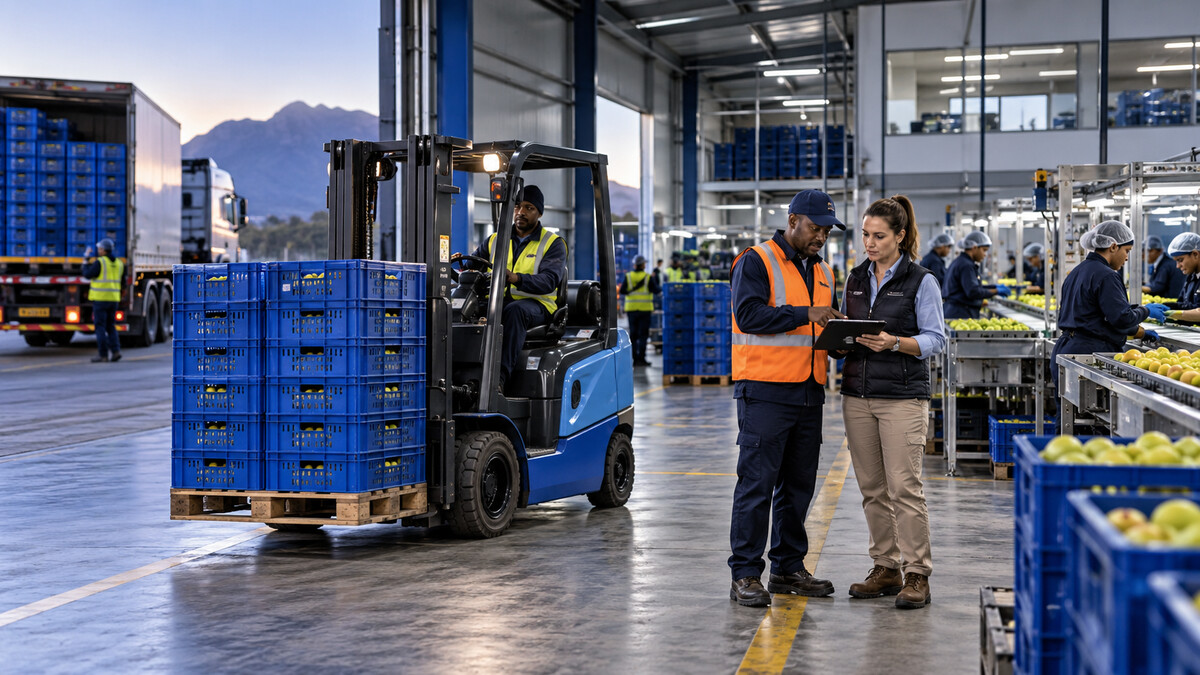
Funding productive assets: structured asset finance enables packhouses, agricultural producers and distribution centres to modernise equipment without depleting operating cash flow.
White paper for businesses, suppliers and affiliates evaluating practical asset finance approaches across agriculture, warehousing, logistics, packhouse operations and industrial environments.
Executive Overview
Preserve Cash Flow
Fund Productive Assets
Structure with Confidence
Access essential equipment through structured monthly payments instead of large upfront capital outlays.
Finance the equipment that drives throughput, handling efficiency, storage capacity and operational performance.
Choose between Operating Lease and Finance Lease structures aligned to the asset, cash flow and ownership objective.
Executive Summary
The ability to acquire productive assets without placing unnecessary pressure on cash flow or banking facilities is increasingly important for growth-focused businesses. Through flexible lease structures, specialist asset knowledge and practical funding capability, DRS supports businesses that need equipment to improve productivity, increase capacity, modernise operations or respond to seasonal demand.
The DRS offering is especially relevant to agriculture, packhouses, cold storage facilities, distribution centres, warehousing operations, logistics companies, manufacturing businesses and material-handling environments where productive assets directly influence service delivery and commercial performance.
Operating Lease: ideal where the priority is predictable monthly rentals, monthly VAT recovery, working capital preservation and operational flexibility.
Finance Lease: ideal for higher-value capital equipment where long-term use, asset capitalisation and ownership-related benefits are important.
Modula Warehouse Automation: a practical solution for customers seeking improved space utilisation, faster picking, stronger inventory control and more efficient warehouse operations.
Strategic Impact
In practical terms, structured asset finance converts operational asset requirements into funding pathways that support liquidity, speed of execution and long-term growth.
A Smarter Way to Fund Productive Assets
Dynamic Rental Solutions (DRS) helps businesses unlock growth by funding the assets that keep operations moving. Instead of delaying purchases or tying up cash in large upfront investments, customers can access practical lease structures that support productivity, cash flow and long-term operational resilience.
From returnable packaging and material-handling equipment to agricultural machinery, packhouse infrastructure, and warehouse automation, DRS structures finance around the asset, the customer, and the commercial objective.
The result: businesses can access the equipment they need while retaining liquidity for the priorities that matter most.
This white paper provides an executive-level view of practical asset finance structures, their application, and how businesses can assess the suitability of different funding options for productive assets. By combining asset knowledge, flexible funding capability, and practical commercial insight, DRS helps customers and affiliates move from asset requirements to funded solutions with confidence.
1. Why Businesses Use Structured Asset Finance
Businesses use structured asset finance when they need more than a standard finance product. DRS brings specialist knowledge of productive assets, practical deal structuring and access to flexible funding channels that help customers acquire equipment without disrupting cash flow.
Whether the objective is to increase capacity, replace ageing equipment, automate a warehouse, support a seasonal requirement or expand a packhouse operation, DRS structures solutions around the customer’s operating reality in sectors such as:
Agriculture
Packhouses
Cold storage facilities
Distribution centres
Warehousing operations
Manufacturing businesses
Logistics companies
Material handling operations
2. Finance Options Built Around Your Business
Practical lease structures can be designed to align with the asset's purpose and the customer's financial priorities. The two primary options are an Operating Lease and a Finance Lease, each offering a clear pathway to access essential equipment while managing cash flow and ownership considerations.
Strategic consideration
The financing structure should align with the asset's purpose, enabling businesses to invest with clarity while avoiding unnecessary strain on working capital.
2.1 Operating Lease: Preserve Cash Flow and Keep Moving
Flexible rental structure with a practical ownership pathway. An Operating Lease gives customers immediate use of an asset through fixed monthly rentals, helping them avoid large upfront cash commitments while keeping operations fully equipped.
This option is particularly attractive for businesses that value predictable monthly costs, monthly VAT recovery and the ability to preserve working capital for stock, labour, inputs and expansion.
Feature
Operating Lease
Monthly VAT Claim
Yes
Large Upfront VAT Payment Required
No
Ownership at End of Term
Yes
Off-Balance Sheet Treatment*
Generally yes
Preserves Banking Facilities
Yes
Improves Cash Flow
Yes
Fixed Monthly Rentals
Yes
Flexible Terms
Yes
*Subject to the client's accounting treatment and auditor guidance.
Benefits of an Operating Lease
Improved Cash Flow: Instead of a large upfront capital outlay, the asset is paid for through fixed monthly rentals, helping businesses preserve cash for core operations and growth.
Monthly VAT Recovery: In many rental-style structures, VAT is charged with the monthly rental rather than requiring a full upfront VAT payment. This can support cash flow, subject to the customer’s VAT status and the final transaction structure.
Reduced Pressure on Working Capital: Leaves more liquidity available for everyday business needs such as labour, seasonal inputs, stock, distribution and expansion initiatives.
Preservation of Gearing Ratios: Depending on the customer’s accounting treatment and adviser guidance, this structure may offer balance sheet and gearing advantages when compared with conventional debt funding.
Budget Certainty: Fixed rentals over the term provide budgeting certainty and make financial planning easier.
2.2 Finance Lease: Fund High-Value Equipment with Confidence
A Finance Lease is designed for customers acquiring higher-value capital equipment for long-term use. It enables the customer to spread the cost of the asset over a practical term while benefiting from a structured ownership and capitalisation pathway.
This structure is well-suited to equipment that plays a lasting role in the business, such as forklifts, tractors, harvesters, warehouse automation, manufacturing machinery and specialist handling assets.
Feature
Finance Lease
Full VAT Recoverable Upfront
Yes
Asset Capitalised
Yes
Ownership Benefits
Yes
Ideal for High-Value Equipment
Yes
Fixed Monthly Instalments
Yes
Flexible Terms
Yes
Benefits of a Finance Lease
Full VAT Recovery at Commencement: For VAT-registered businesses, this structure may allow the VAT to be dealt with at the start of the transaction rather than over the term, depending on the final agreement and applicable VAT treatment.
Asset Ownership Benefits: The asset is generally treated as part of the customer’s asset base for commercial and accounting purposes, subject to applicable standards and adviser guidance.
Ideal for Capital Equipment: Finance Leases are commonly used for higher-value equipment including forklifts, trucks, tractors, harvesters, warehouse automation, material handling and manufacturing machinery.
Long-Term Asset Acquisition: Allows businesses to acquire essential capital equipment while spreading repayment over a practical term, often up to 60 months.
3. Choosing the Right Structure
The most suitable structure is determined by the commercial role of the asset, the customer’s liquidity requirements, the preferred ownership outcome and the accounting or tax considerations relevant to the transaction. Each opportunity should be assessed individually to identify a structure that supports both operational needs and financial objectives.
In most cases, the recommendation is guided by a combination of the following factors: the type and value of the asset; the customer’s cash flow profile; VAT treatment considerations; accounting and reporting objectives; balance sheet preferences; and the intended ownership outcome.
Asset Type
Preferred Structure
Agri Bins
Operating Lease
Lugs & Crates
Operating Lease
Plastic Pallets
Operating Lease
Warehouse Totes
Operating Lease
Dollies
Operating Lease
Forklifts
Finance Lease
Tractors
Finance Lease
Harvesters
Finance Lease
Material Handling Equipment
Finance Lease
Packhouse Equipment
Finance Lease
Warehouse Automation
Finance Lease
Commercial Flexibility
While these are common patterns, every transaction is structured on its own merits. DRS works with the customer to recommend the most suitable option for the asset, the business and the funding objective.
4. Assets We Finance
Productive equipment being commissioned in a growing operation: DRS connects operations leadership, suppliers, and tailored finance structures.
Productive asset finance typically applies to the assets businesses rely on every day: equipment that moves goods, improves throughput, supports seasonal performance, automates storage and strengthens supply chain reliability.
Returnable Packaging
Returnable packaging is a core DRS specialisation. These assets are essential to agriculture, retail, export supply chains, and high-volume distribution environments, where durability, availability, and rotation control directly affect performance. Financing returnable packaging helps businesses scale without a heavy upfront capital burden, while supporting better asset rotation, improved handling efficiency and stronger control of reusable inventory.
Typical Customers: Farmers, Retailers, Packhouses, Exporters, Distribution Centres, Food Processors.
Material Handling Equipment
Material-handling equipment keeps warehouses, distribution centres, farms and production sites operating efficiently. DRS helps customers acquire the handling assets needed to move stock safely, quickly and reliably.
Products Financed: Diesel Forklifts, Electric Forklifts, Lithium-Ion Forklifts, Reach Trucks, Pallet Stackers, Pallet Jacks, Order Pickers, Tow Tractors, Telehandlers, Container Handlers, Attachments and Specialised Handling Equipment.
Agricultural businesses can use structured finance to fund machinery and equipment that improve productivity, seasonal readiness and operational reliability. By financing farming equipment over a practical term, DRS helps agricultural businesses acquire essential machinery while preserving cash flow for labour, inputs, fuel and seasonal working capital requirements.
Structured finance can support investment in the equipment required for modern packhouse, warehouse and distribution centre operations, from handling systems to infrastructure and automation. Financing these assets allows businesses to improve throughput, strengthen supply chain performance, expand processing capacity and invest in infrastructure without delaying other growth priorities.
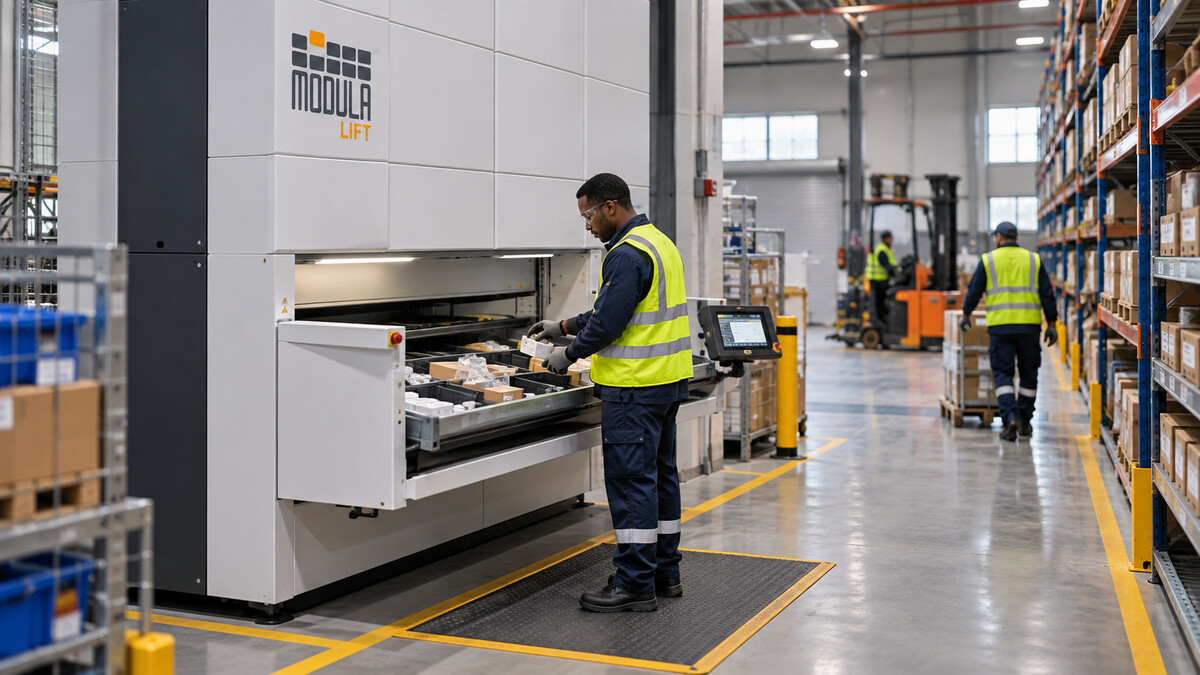
Warehouse automation is a practical example of how asset finance can support modernisation while spreading the cost of investment over an appropriate term. Modula Vertical Lift Modules (VLMs) are globally recognised warehouse automation systems designed to improve space utilisation, picking efficiency, inventory control and operational accuracy.
What Is a Modula VLM?
A Modula Vertical Lift Module is an automated storage and retrieval system that uses vertical space to store inventory in trays within a compact footprint. When an item is requested, the system automatically retrieves the correct tray and presents it to the operator at an ergonomic picking position, reducing walking time, search time and handling effort. This follows the goods-to-person principle, where the product comes to the operator rather than the operator travelling through the warehouse to find it.
How Modula Works
Inventory is stored in trays inside the machine.
The operator requests an item.
The machine automatically retrieves the correct tray.
The tray is delivered to an ergonomic picking station.
The operator picks the required item.
Inventory records are updated automatically.
Benefits of Modula
Recover Up to 90% of Floor Space: By storing inventory vertically, businesses can free up substantial floor space and make room for growth, reconfiguration, or additional operational activity.
Increase Picking Productivity: Because items are delivered directly to the operator, picking activity becomes faster, more consistent and less dependent on manual travel through the warehouse.
Improve Inventory Accuracy: Automated retrieval and controlled storage processes improve inventory accuracy and reduce picking errors.
Enhance Security: Controlled access, enclosed storage and user-based permissions help protect valuable inventory and improve traceability.
Improve Ergonomics: Items are presented at a practical working height, reducing strain, repetitive reaching and unnecessary movement for operators.
Accelerate Order Fulfilment: Faster access to stock can improve response times for picking, replenishment, and order preparation.
Improve Warehouse Safety: Reduced manual handling and less traffic through storage aisles can contribute to a safer warehouse environment.
6. Funding Capability and Capital Sources
DRS draws on multiple funding channels to structure solutions that are practical, competitive and responsive to different customer requirements. This depth of funding enables DRS to support transactions that may not fit neatly within traditional lending models, while maintaining disciplined credit and commercial assessment standards.
DRS Balance Sheet Funding: For selected transactions, DRS can fund directly from its balance sheet. This can support faster execution, greater flexibility and more tailored deal structuring.
Private Capital Relationships: DRS works with private capital partners who understand asset-backed funding and can support commercially structured transactions.
Major Banking Partnership: DRS also works through a major South African banking relationship, which strengthens our institutional funding capabilities and transaction support (dedicated credit support, key account management, administrative support, and asset finance expertise).
7. DRS Transaction Process
Simple, structured pathway
From initial enquiry to delivery, DRS provides a structured pathway that keeps the customer, supplier and funding process aligned.
Step
Focus Area
Key Actions
Step 1
Initial enquiry
Customer contacts DRS or approved affiliate: equipment required, estimated value, business details, funding objective.
Customer selects preferred finance term (12, 24, 36, 48, or 60 Months).
Step 4
Credit application
Customer completes application and provides financial statements, bank records, and FICA documentation.
Step 5
Credit assessment
DRS credit team reviews affordability, cash flow strength, asset suitability, and credit profile.
Step 6
Contracting
Customer executes the relevant agreement based on the approved funding structure.
Step 7
Insurance & delivery
Proof of insurance confirmed; DRS settles supplier directly for delivery and commissioning.
Step 8
Commissioning
Equipment placed into operation; agreed fixed monthly instalments commence.
8. The DRS Advantage
Customer, supplier and asset finance specialist reviewing requirements: the most effective funding structures take account of the asset's commercial role, not only the transaction behind it.
DRS stands apart because it understands both the financial transaction and the operational value of the asset being funded. Customers benefit from a partner that can speak to suppliers, assess the asset, structure the deal and support the transaction from enquiry through to implementation.
Specialist industry and asset expertise across agriculture, returnable packaging, warehousing, material handling, intralogistics and automation.
Clear pricing and transparent structuring with no unnecessary complexity.
Responsive turnaround and decision-making for commercial opportunities.
Flexible solutions built around the transaction rather than a generic template.
Direct relationships and practical commercial support from experienced professionals.
Specialist understanding of residual value, equipment application, and operational lifecycles.
Strong supplier and market relationships across trusted South African equipment distributors.
Depth of funding capability combining direct balance sheet, private capital, and banking partnerships.
9. Conclusion: Structuring Productive Asset Finance with Confidence
If your business needs equipment to grow, improve efficiency, or strengthen operational capacity, DRS can help you fund the necessary assets without unnecessarily straining working capital. Organisations evaluating productive asset finance should assess the asset requirement, commercial objective, cash flow profile and preferred ownership outcome before selecting the most appropriate funding structure.
Discuss your asset requirement with our team
Review the most suitable finance structure (Operating Lease vs Finance Lease)
Receive a tailored funding proposal aligned to your cash flow
Appendix A: General Terms and Conditions
The following terms apply to quotations, proposals, and funding transactions and are provided for reference in this guide.
1.1 Validity: Proposals are valid for 14 calendar days from the date of issue unless withdrawn earlier by DRS in writing.
1.2 Invitation to Business: Proposals constitute invitations to do business and do not form binding offers until confirmed in writing post-credit approval.
1.3 Acceptance: Acceptance must be in writing and signed by both parties via final agreements.
1.4 Price Revisions: DRS may revise pricing or terms prior to written confirmation based on supplier or market changes.